


In today’s digital marketing world, businesses constantly face one important question: Should you focus on blogging or social media content? Both are powerful tools, but they serve different purposes and deliver different types of results.
If you’re running a business like Huraira Marketing, understanding the difference between blog content and social media content can help you build a stronger online presence, generate leads, and increase conversions.
In this article, we’ll break down everything you need to know about blogs vs social media, their advantages, disadvantages, and which one is better for your business.
What Is Blog Content?
Blog content refers to long-form written articles published on a website. These posts are designed to provide value, educate readers, and improve search engine visibility.
A blog typically includes:
- In-depth articles (1000–2000+ words)
- SEO optimization (keywords, headings, links)
- Evergreen content (long-lasting value)
- Informational or educational topics
Blogs are a major part of content marketing because they help attract organic traffic from search engines like Google.
According to research, blogs are powerful because they are indexed by search engines and can drive continuous traffic over time.
What Is Social Media Content?
Social media content includes posts shared on platforms like Facebook, Instagram, TikTok, LinkedIn, and Twitter.
This content is usually:
- Short-form (captions, reels, posts)
- Visual (images, videos)
- Fast and engaging
- Designed for instant interaction
Social media is excellent for:
- Brand awareness
- Audience engagement
- Viral reach
However, unlike blogs, social media content has a very short lifespan and often disappears quickly in feeds.
Key Differences Between Blog and Social Media Content
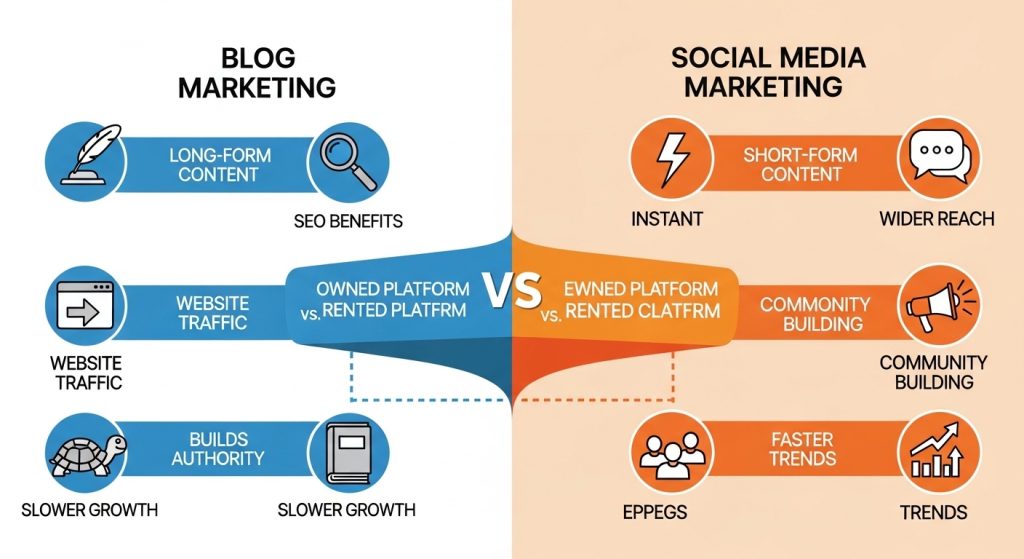
1. Content Length & Depth
- Blogs: Long-form, detailed, and informative
- Social Media: Short, quick, and engaging
Blogs allow you to explain topics in detail, while social media focuses on quick consumption.
2. Lifespan of Content
- Blogs: Long-lasting (months or years)
- Social Media: Short lifespan (hours or days)
A well-written blog post can generate traffic for years, while a social media post may only stay relevant for a short time.
3. Traffic Quality
- Blogs: High-quality, targeted traffic
- Social Media: High volume, lower intent
Blog visitors usually come with a specific purpose, which leads to better engagement and conversions.
4. SEO Benefits
- Blogs: Strong SEO impact
- Social Media: Indirect SEO impact
Blogs help your website rank on Google, while social media mainly supports visibility and traffic indirectly.
5. Ownership & Control
- Blogs: Fully owned (your website)
- Social Media: Controlled by platforms
When you post on social media, you rely on algorithms. But with blogs, you own your content and audience.
6. Engagement Style
- Blogs: Deep engagement (reading, learning)
- Social Media: Quick engagement (likes, shares, comments)
Social media is better for interaction, while blogs are better for education and authority building.
Advantages of Blog Content

1. Long-Term Traffic (Evergreen Content)
Blog posts continue to attract visitors long after publishing. This makes them a long-term asset for your business.
2. Better SEO Rankings
Every blog post is an opportunity to rank on Google. The more quality content you create, the better your chances of appearing in search results.
3. Builds Authority & Trust
Detailed blog content positions your brand as an expert in your industry.
4. Higher Conversion Rates
People reading blogs are often searching for solutions, which makes them more likely to convert into customers.
5. Cost-Effective Marketing
Unlike paid ads, blog content keeps delivering results without ongoing costs.
Disadvantages of Blog Content
- Takes time to write and rank
- Requires SEO knowledge
- Needs consistency
- Results are slower compared to social media
Advantages of Social Media Content

1. Instant Reach
Social media allows you to reach thousands (or millions) of people instantly.
2. High Engagement
Likes, shares, and comments help build relationships with your audience.
3. Viral Potential
A single post can go viral and bring massive exposure.
4. Easy to Create
Compared to blogs, social media content is faster and easier to produce.
5. Targeted Advertising
Platforms allow precise audience targeting based on interests, behavior, and demographics.
Disadvantages of Social Media Content
- Short lifespan
- Algorithm dependency
- Lower conversion intent
- Requires constant posting
- Limited SEO benefits
Which Is Better for Your Business?
The Honest Answer: You Need Both
The debate of blog vs social media content is not about choosing one—it’s about using both strategically.
Here’s how each fits into your marketing strategy:
Use Blogs For:
- SEO and organic traffic
- In-depth education
- Lead generation
- Building authority
Use Social Media For:
- Brand awareness
- Engagement
- Traffic generation
- Promotion
The Best Strategy: Combine Both
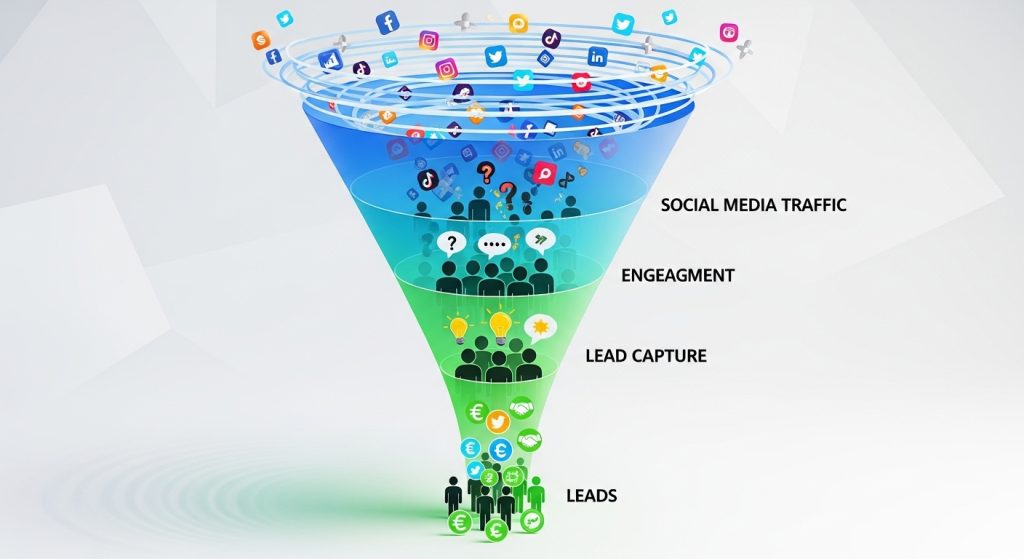
The most successful businesses use a hybrid strategy:
Step 1: Create Blog Content
Write high-quality blog posts optimized for SEO.
Step 2: Promote on Social Media
Share blog content on platforms to drive traffic.
Step 3: Repurpose Content
Turn blogs into:
- Reels
- Carousels
- Short posts
- Infographics
Step 4: Build a Funnel
Use social media to attract users → send them to your blog → convert them into customers.
Real-World Example
Let’s say you write a blog post about:
“How to Run Facebook Ads”
You can turn it into:
- Instagram carousel
- Facebook post
- LinkedIn article
- Short video
This way, one blog creates multiple content pieces.
Blog vs Social Media: Final Comparison Table
| Feature | Blog Content | Social Media Content |
|---|---|---|
| Content Length | Long-form | Short-form |
| Lifespan | Long-term | Short-term |
| SEO | Strong | Weak |
| Traffic Quality | High | Medium |
| Engagement | Deep | Quick |
| Cost | Low long-term | Ongoing |
| Control | Full ownership | Platform dependent |
Final Verdict
If you want long-term growth, SEO, and authority → choose blogging
If you want fast engagement, reach, and brand awareness → choose social media
But if you want real success → combine both strategically.
Conclusion
In 2026, content marketing is not about choosing between blog and social media—it’s about how well you integrate them.
Blogs provide the foundation of your digital presence, while social media amplifies your reach.
If you’re serious about growing your business, you need:
✔ SEO-driven blog content
✔ Consistent social media posting
✔ A clear content strategy
About Us
Grow your business with professional digital marketing services:
Website: https://hurairamarketing.site/
Call / WhatsApp: +92 321 6200476
Email: info@hurairamarketing.site

