
Learn how to find profitable SEO keywords in 2026 with this complete beginner-to-advanced guide. Discover free keyword research tools, long-tail keyword strategies, competitor analysis, and expert SEO tips to rank higher on Google.
What Is Keyword Research?
Keyword research is the process of identifying the words and phrases your target audience types into search engines when looking for information, products, or services.
For example:
- Short-tail keyword: digital marketing
- Long-tail keyword: affordable digital marketing services in Pakistan
- Question keyword: how to run Facebook ads for small business
Finding the right keywords helps you:
✔ Rank higher on Google
✔ Attract relevant traffic
✔ Understand customer intent
✔ Create content people actually search for
✔ Increase conversions
Without keyword research, you’re basically creating content blindly.
Why Keyword Research Matters in 2026
SEO has changed dramatically.
Google now uses:
- AI-generated search overviews
- Search intent analysis
- Semantic understanding
- Topical authority scoring
- User behavior signals
This means simply repeating keywords is no longer enough. Keyword density is less important; intent and topic coverage matter more.
Good keyword research helps you align your content with what users truly need.
Step 1: Understand Your Target Audience

Before opening any SEO tool, ask:
Who is searching?
Examples:
- Business owners
- Students
- E-commerce sellers
- Local customers
What problems do they have?
Examples:
- Need website traffic
- Want more sales
- Need better rankings
What words would they use?
Think like your audience.
Example for digital marketing:
- Facebook ads service
- SEO expert Pakistan
- website development company
- social media marketing
These are called seed keywords.
Step 2: Start with Google Search Suggestions

Google itself is one of the best free keyword tools.
Method 1: Google Autocomplete
Type your seed keyword and watch suggestions.
Example:
Type:
SEO services
Google may suggest:
- SEO services near me
- SEO services for small business
- SEO services pricing
- SEO services Pakistan
These are real searches.
Method 2: People Also Ask
Search a keyword and scroll to:
People Also Ask
Example:
- What is SEO keyword research?
- How do beginners do keyword research?
- What tools help find keywords?
These are excellent blog topics.
Method 3: Related Searches
At the bottom of Google results, check related searches.
Great source of keyword ideas.
Step 3: Use Free Keyword Research Tools

1. Google Keyword Planner
Best free keyword tool.
Benefits:
- Search volume
- Competition level
- CPC data
- Trend analysis
Great for beginners.
2. Google Trends
Helps identify trending keywords.
Useful for:
- Seasonal keywords
- Rising topics
- Geographic demand
Example:
Compare:
- SEO tools
- AI SEO tools
3. Keyword Surfer
Chrome extension.
Shows:
- Search volume
- Similar keywords
- Estimated traffic
Very beginner-friendly.
4. AnswerThePublic
Finds question-based keywords.
Examples:
- how to do SEO
- why keyword research matters
Great for blogs.
Step 4: Use Paid Keyword Tools for Advanced Research

Professional marketers use premium tools.
Ahrefs
Excellent for:
- Keyword difficulty
- Search volume
- Competitor analysis
- Click data
- Keyword clustering
One of the top SEO tools in 2026.
SEMrush
Great for:
- Keyword gap analysis
- Competitor keyword tracking
- Topic research
Ubersuggest
Affordable option.
Good for:
- Beginners
- Small businesses
Moz Keyword Explorer
Easy to use and beginner-friendly.
Step 5: Understand Keyword Metrics
Not every keyword is worth targeting.
Search Volume
How many monthly searches?
Example:
- SEO = 100k+
- SEO services in Gujranwala = 300
High volume can mean high competition.
Keyword Difficulty (KD)
How hard it is to rank.
Scale:
- 0–20 = Easy
- 21–40 = Medium
- 41–70 = Hard
- 70+ = Very hard
Beginners should target low-difficulty keywords.
CPC (Cost Per Click)
Higher CPC often means commercial intent.
Example:
“buy SEO services” has more value than “what is SEO”.
Click Potential
Some keywords get fewer clicks because Google answers directly with AI summaries or featured snippets. AI Overviews can reduce organic click-through rates significantly.
Step 6: Understand Search Intent (Most Important)
Search intent matters more than exact keyword matching in 2026.
There are 4 main types:
Informational
User wants information.
Examples:
- what is SEO
- how to rank website
Best for blog posts.
Navigational
User wants a specific website.
Examples:
- Facebook login
- Ahrefs keyword tool
Commercial Investigation
User comparing options.
Examples:
- best SEO tools
- Ahrefs vs SEMrush
Great for affiliate blogs.
Transactional
User wants to buy.
Examples:
- hire SEO expert
- SEO services Pakistan
Best for service pages.
Step 7: Focus on Long-Tail Keywords
Long-tail keywords are easier to rank for and convert better.
Example:
Instead of:
SEO
Use:
SEO services for small businesses in Pakistan
Benefits:
✔ Less competition
✔ More targeted traffic
✔ Higher conversion rate
Step 8: Analyze Competitor Keywords
One of the fastest methods.
Use tools like:
- Ahrefs Site Explorer
- SEMrush Domain Overview
Look at:
- What keywords competitors rank for
- Top traffic pages
- Keyword gaps
Steal smartly.
Step 9: Find Keyword Clusters

Google prefers topical authority.
Instead of writing one keyword per article, build clusters.
Example:
Main topic: SEO Keyword Research
Cluster articles:
- free keyword research tools
- keyword difficulty explained
- how to analyze competitors
- long-tail keywords
- search intent guide
This boosts authority.
Step 10: Prioritize Keywords
Choose keywords based on:
Relevance
Does it match your business?
Difficulty
Can your site realistically rank?
Traffic Potential
Enough volume?
Business Value
Will it bring leads or sales?
Best formula:
High relevance + low difficulty + buyer intent
Keyword Research Workflow (Professional Method)
Here’s the exact process many marketers use:
1. Brainstorm seed keywords
2. Expand using Google Autocomplete
3. Use keyword tools
4. Analyze difficulty
5. Check intent
6. Analyze competitors
7. Build keyword clusters
8. Create content
9. Track rankings
10. Update regularly
Common Keyword Research Mistakes
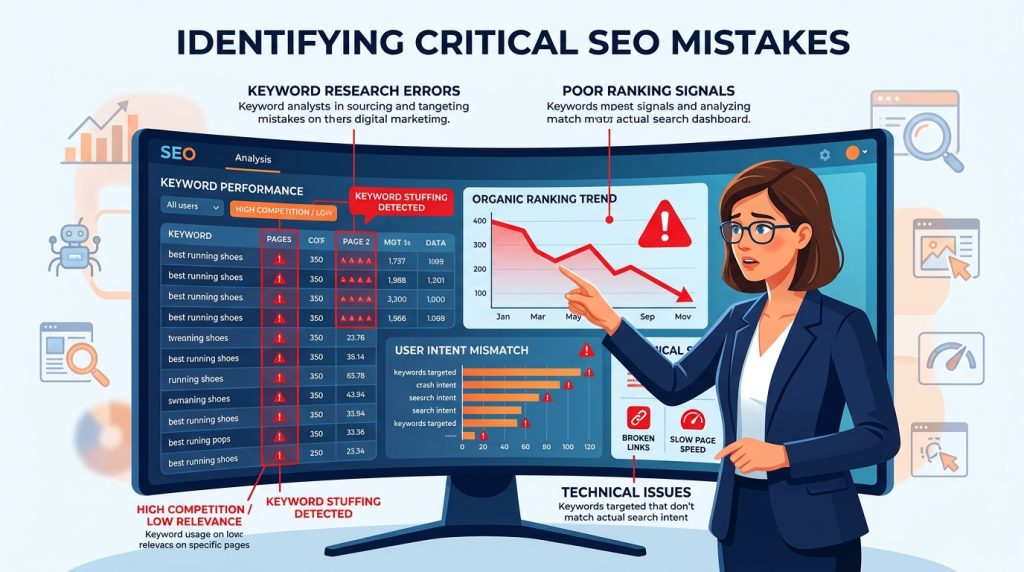
Targeting only high-volume keywords
Too competitive.
Ignoring search intent
Wrong intent = no rankings.
Keyword stuffing
Outdated strategy.
Ignoring long-tail keywords
Huge missed opportunity.
Not analyzing competitors
You lose easy opportunities.
Best Free Keyword Tools (2026)
- Google Keyword Planner
- Google Search Console
- Google Trends
- Keyword Surfer
- AnswerThePublic
- AlsoAsked
- ChatGPT for brainstorming
Best Paid Keyword Tools
- Ahrefs
- SEMrush
- Moz Pro
- Ubersuggest
- KeywordTool.io
SEO Keyword Research Checklist
✔ Choose seed keywords
✔ Use Google suggestions
✔ Find long-tail keywords
✔ Analyze difficulty
✔ Check search intent
✔ Spy on competitors
✔ Build keyword clusters
✔ Create optimized content
✔ Track rankings
✔ Update regularly
Final Thoughts
Keyword research is no longer just about finding popular search terms.
In 2026, successful SEO requires:
- Understanding user intent
- Building topic authority
- Finding low-competition opportunities
- Creating genuinely helpful content
Master keyword research, and your SEO results will improve dramatically.
Website:hurairamarketing.site
Call / WhatsApp: +92 321 6200476
Email:info@hurairamarketing.site