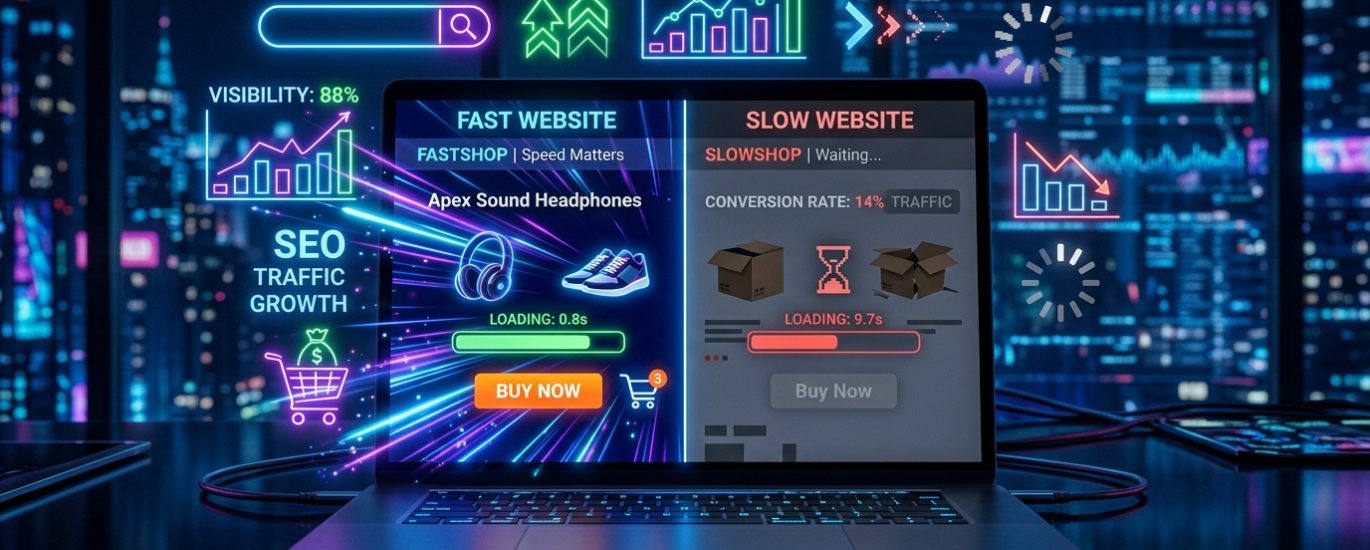
In today’s digital world, speed is everything. Whether you’re running an eCommerce store, a service-based website, or a blog, your website’s loading time can make or break your success. A fast website doesn’t just improve user experience—it plays a crucial role in boosting your SEO rankings and increasing conversions.
In this comprehensive guide, we’ll explore how website speed impacts SEO, user behavior, and conversion rates—and what you can do to optimize your site for better performance.
Why Website Speed Matters More Than Ever

The modern internet user has zero patience for slow-loading websites. Studies show that users expect a page to load in under 3 seconds. If it takes longer, they are likely to leave—and they may never come back.
Here’s why speed matters:
- First impressions count
- User attention spans are shorter than ever
- Competition is just one click away
A slow website creates friction, while a fast one builds trust and engagement.
The Relationship Between Website Speed and SEO

Search engines prioritize user experience, and website speed is a key part of that. Google has officially confirmed that page speed is a ranking factor.
1. Faster Websites Rank Higher
Search engines aim to deliver the best possible experience. A fast-loading website signals quality and reliability, making it more likely to rank higher in search results.
2. Core Web Vitals Impact Rankings
Google’s Core Web Vitals measure:
- Loading performance (Largest Contentful Paint)
- Interactivity (First Input Delay)
- Visual stability (Cumulative Layout Shift)
If your site performs poorly in these metrics, your rankings may suffer.
3. Improved Crawl Efficiency
Search engine bots have limited time to crawl your website. A faster site allows them to index more pages quickly, improving your overall visibility.
How Website Speed Affects User Experience

User experience (UX) is directly tied to how quickly your site loads.
1. Reduced Bounce Rate
A slow website increases bounce rates. Visitors leave before interacting with your content, which signals to search engines that your site may not be valuable.
2. Increased Engagement
Fast websites encourage users to:
- Stay longer
- Explore more pages
- Interact with content
3. Better Mobile Experience
With the majority of users browsing on mobile devices, speed optimization is critical. Mobile users often have slower internet connections, making speed even more important.
The Impact of Speed on Conversions

Website speed doesn’t just affect traffic—it directly impacts revenue.
1. Faster Load Time = Higher Conversion Rate
Even a 1-second delay can significantly reduce conversions. Fast-loading websites create a smooth journey that encourages users to take action.
2. Improved Trust and Credibility
Users associate speed with professionalism. A slow site feels outdated or unreliable, while a fast one builds trust.
3. Better Shopping Experience
For eCommerce websites:
- Faster checkout processes reduce cart abandonment
- Quick product page loads increase purchase likelihood
Real-World Example of Speed Impact
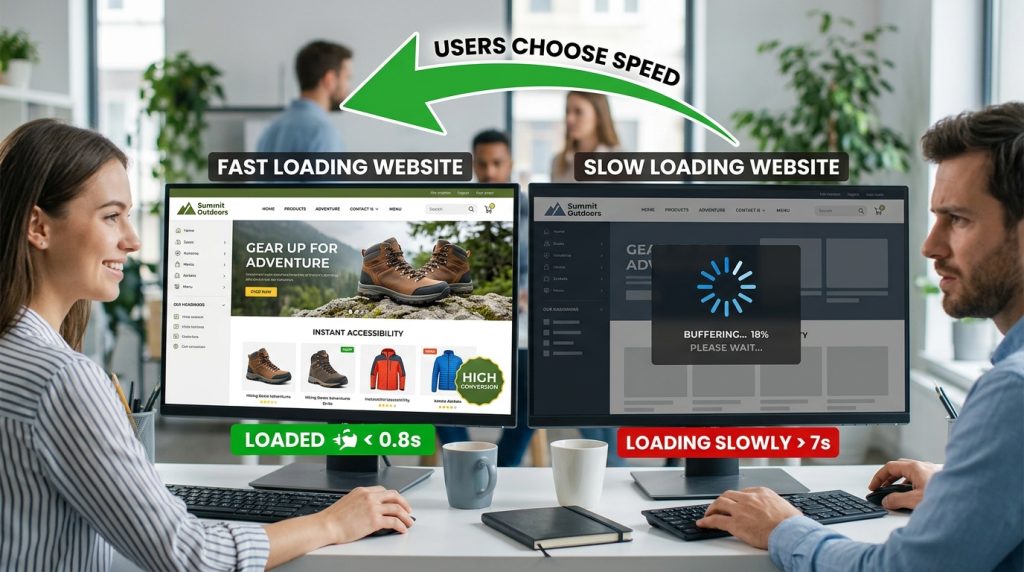
Imagine two websites offering the same service:
- Website A loads in 2 seconds
- Website B loads in 6 seconds
Most users will choose Website A simply because it provides a faster, smoother experience.
Key Factors That Affect Website Speed

Understanding what slows down your site is the first step toward improvement.
1. Large Image Files
Unoptimized images are one of the biggest causes of slow websites.
2. Poor Hosting
Cheap or shared hosting can lead to slower load times, especially during high traffic.
3. Excessive Plugins
Too many plugins can overload your website and slow it down.
4. Unoptimized Code
Heavy CSS, JavaScript, and HTML can increase load times.
5. Lack of Caching
Without caching, your website reloads everything from scratch for every visitor.
How to Improve Website Speed

Here are practical steps to make your website faster:
1. Optimize Images
- Compress images without losing quality
- Use modern formats like WebP
2. Use a Content Delivery Network (CDN)
A CDN distributes your content across multiple servers worldwide, reducing load time for users.
3. Enable Browser Caching
Caching stores parts of your website in the user’s browser, making repeat visits faster.
4. Minify CSS, JavaScript, and HTML
Removing unnecessary code reduces file size and speeds up loading.
5. Choose Fast Hosting
Invest in reliable hosting that offers:
- High uptime
- Fast server response times
6. Reduce HTTP Requests
Limit the number of elements on each page to reduce load time.
7. Enable Lazy Loading
Load images and videos only when users scroll to them.
Mobile Optimization: A Must for Speed

Google uses mobile-first indexing, meaning your mobile site performance is more important than ever.
Tips for Mobile Speed Optimization:
- Use responsive design
- Reduce pop-ups
- Optimize fonts and layouts
- Test on multiple devices
Tools to Measure Website Speed

To improve speed, you need to measure it first.
Popular tools include:
- Google PageSpeed Insights
- GTmetrix
- Pingdom
These tools provide insights and suggestions for optimization.
Speed and Local SEO

If you’re targeting local customers, speed becomes even more critical.
For example, if someone searches for services in your area and your site loads slowly, they are more likely to choose a competitor.
Fast websites:
- Improve local rankings
- Increase customer trust
- Drive more leads
Common Mistakes to Avoid

1. Ignoring Mobile Users
2. Using Too Many Heavy Animations
3. Not Testing Website Speed Regularly
4. Choosing Design Over Performance
Balancing design and speed is key.
The Long-Term Benefits of a Fast Website

Investing in website speed offers long-term advantages:
- Higher search rankings
- Better user experience
- Increased conversions
- Stronger brand reputation
Final Thoughts
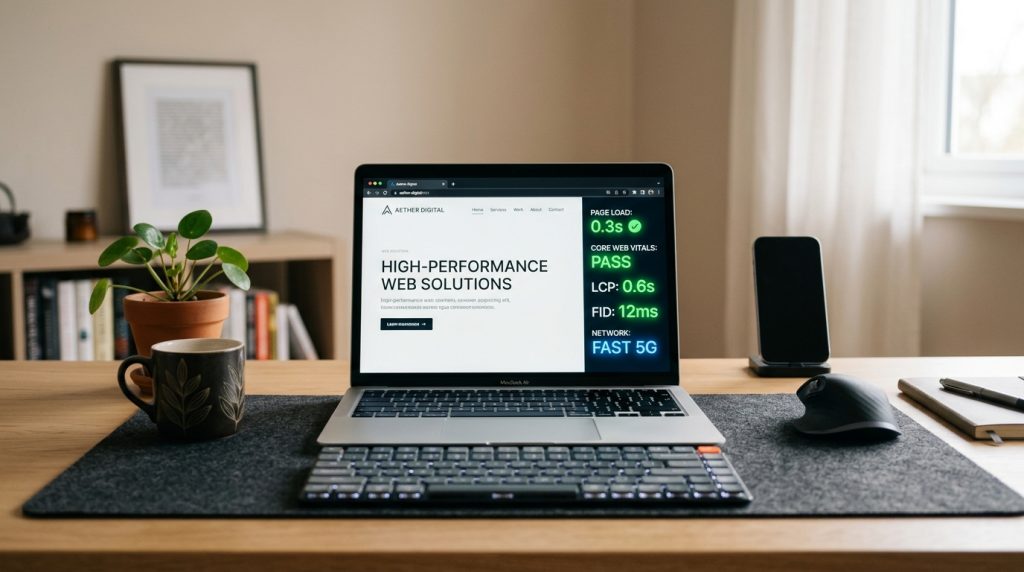
A fast website is no longer optional—it’s essential. It directly impacts your SEO performance, user engagement, and conversion rates. In a competitive online landscape, speed can be your biggest advantage.
If your website is slow, you’re not just losing traffic—you’re losing potential customers and revenue.
Need Help Optimizing Your Website?
If you want to improve your website speed, boost SEO, and increase conversions, professional help can make a huge difference.
Website: https://hurairamarketing.site/
Call / WhatsApp: +92 321 6200476
Email: info@hurairamarketing.site