

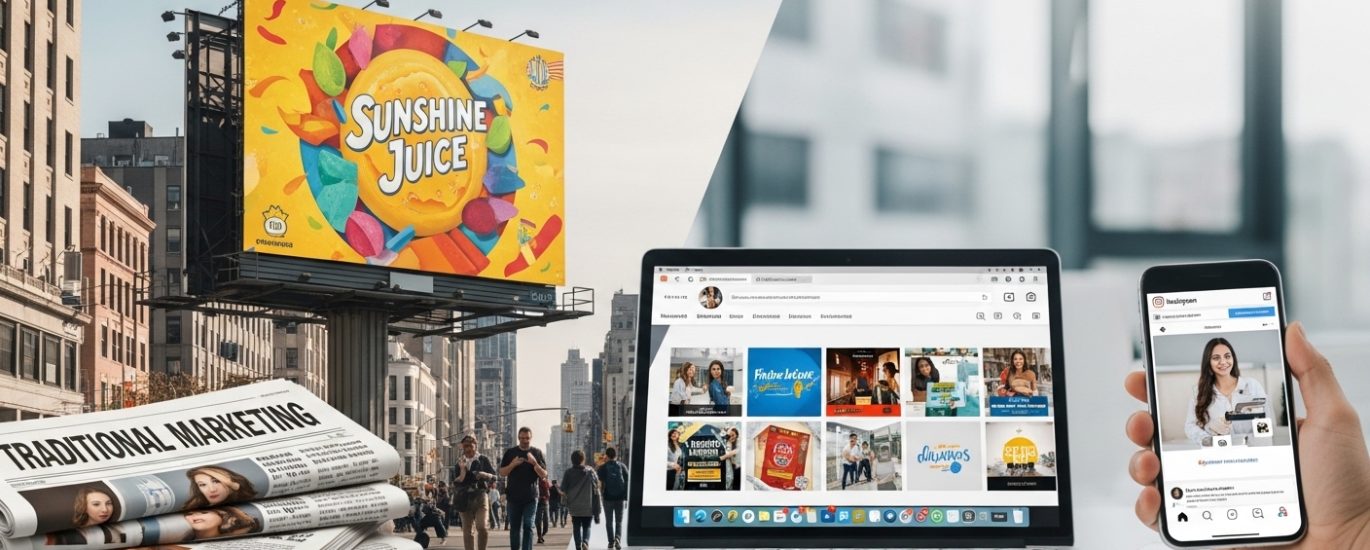
In today’s rapidly evolving business landscape, marketing has become more dynamic than ever. Companies now face a critical decision: should they rely on traditional marketing methods or embrace digital marketing strategies? Both approaches have their own strengths, weaknesses, and ideal use cases.
Understanding the differences between traditional marketing and digital marketing is essential for businesses that want to maximize their return on investment (ROI), reach the right audience, and stay competitive in the modern marketplace.
This article explores both marketing methods in depth and helps you determine which one is better for your business.
What Is Traditional Marketing?
Traditional marketing refers to conventional methods of advertising that have been used for decades. These include:
- Television commercials
- Radio advertisements
- Newspaper and magazine ads
- Billboards and banners
- Direct mail and brochures
These methods are primarily offline and focus on reaching a broad audience through mass media.
Traditional marketing is often associated with brand awareness campaigns and is widely used by large corporations.
What Is Digital Marketing?

Digital marketing involves promoting products or services using online platforms and digital technologies. Common channels include:
- Social media marketing
- Search Engine Optimization (SEO)
- Email marketing
- Pay-Per-Click (PPC) advertising
- Content marketing
Digital marketing allows businesses to connect with their audience through the internet and smart devices, making it highly flexible and data-driven.
Key Differences Between Traditional and Digital Marketing
1. Medium of Communication
- Traditional marketing uses offline channels like TV, print, and radio.
- Digital marketing uses online platforms such as websites, apps, and social media.
2. Audience Reach
- Traditional marketing targets local or regional audiences.
- Digital marketing has a global reach, allowing businesses to connect with customers worldwide.
3. Cost
- Traditional marketing is often expensive due to production and distribution costs.
- Digital marketing is more cost-effective and accessible for small businesses.
4. Measurability
- Traditional marketing results are difficult to track.
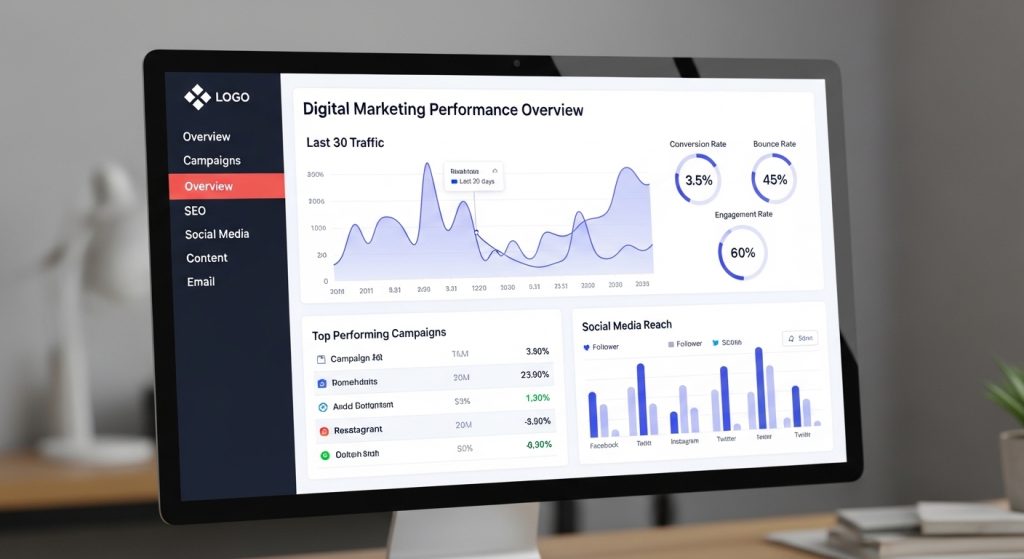
- Digital marketing provides real-time analytics and performance data.
5. Interaction
- Traditional marketing is one-way communication.
- Digital marketing allows two-way interaction with customers.
Advantages of Traditional Marketing

1. Builds Trust and Credibility
Traditional marketing materials like brochures, newspapers, and TV ads often feel more trustworthy to consumers.
2. Strong Local Reach
It is highly effective for targeting local audiences through billboards, newspapers, and radio ads.
3. Tangible and Memorable
Physical advertisements create a lasting impression, making it easier for customers to remember brands.
4. Ideal for Older Demographics
Older audiences are more likely to engage with traditional media compared to digital platforms.
Disadvantages of Traditional Marketing
1. High Cost
Running TV ads or printing large-scale campaigns requires significant investment.
2. Limited Targeting
Traditional marketing cannot precisely target specific audience segments.
3. Difficult to Measure ROI
Tracking campaign performance is challenging and often based on estimates.
4. Lack of Engagement
There is little to no direct interaction with customers.
Advantages of Digital Marketing
1. Cost-Effective
Digital marketing campaigns can be run with minimal budgets, making them ideal for startups and small businesses.
2. Precise Targeting
Businesses can target audiences based on age, location, interests, and behavior.
3. Measurable Results
Tools like analytics dashboards provide detailed insights into campaign performance.
4. Real-Time Interaction
Customers can engage with brands instantly through comments, messages, and feedback.
5. Scalability and Flexibility
Campaigns can be adjusted, paused, or scaled at any time.
Disadvantages of Digital Marketing
1. High Competition
The digital space is crowded, making it harder to stand out.
2. Requires Skills and Knowledge
Digital marketing requires expertise in tools, platforms, and analytics.
3. Ad Fatigue
Users are exposed to numerous ads, which can reduce effectiveness.
4. Constant Changes
Algorithms and trends change frequently, requiring continuous learning.
Traditional Marketing vs Digital Marketing: A Detailed Comparison

| Feature | Traditional Marketing | Digital Marketing |
|---|---|---|
| Cost | High | Low to Moderate |
| Reach | Local/Regional | Global |
| Targeting | Broad | Highly Specific |
| Interaction | One-way | Two-way |
| Measurability | Limited | Accurate & Real-time |
| Flexibility | Low | High |
Which Marketing Strategy Delivers Better ROI?

When it comes to return on investment, digital marketing clearly has an advantage.
Digital marketing allows businesses to track:
- Click-through rates (CTR)
- Conversion rates
- Cost per acquisition (CPA)
- Customer lifetime value (CLV)
This level of data enables better decision-making and optimization of campaigns.
Traditional marketing, on the other hand, relies on estimates and indirect metrics, making it less efficient for performance tracking.
When Should You Use Traditional Marketing?

Traditional marketing is best when:
- You are targeting a local audience
- Your business relies on offline presence (e.g., retail stores)
- You want to build strong brand credibility
- Your audience prefers offline media
When Should You Use Digital Marketing?

Digital marketing is ideal when:
- You want global reach
- You have a limited budget
- You need measurable results
- You want to target specific audiences
- You aim for fast growth and scalability
The Best Strategy: A Hybrid Approach
Instead of choosing one over the other, many successful businesses combine both strategies.
For example:
- Use traditional marketing for brand awareness
- Use digital marketing for conversions and engagement
This integrated approach ensures maximum reach and effectiveness.
Future of Marketing
The future clearly leans toward digital marketing due to:
- Increasing internet usage
- Growth of social media platforms
- Mobile-first consumer behavior
However, traditional marketing will not disappear. It will continue to play a role in branding and local outreach.
Final Verdict: Which Is Better?
So, which is better—traditional marketing or digital marketing?
The answer depends on your business goals.
- If you want cost-effective, measurable, and targeted campaigns, digital marketing is the winner.
- If you want mass awareness and strong brand trust, traditional marketing still holds value.
For most modern businesses, digital marketing is the better choice, especially when combined with traditional methods for a balanced strategy.
Grow Your Business with Expert Digital Marketing
If you’re ready to scale your business using powerful digital marketing strategies, we’re here to help.
Website: https://hurairamarketing.site/
Call / WhatsApp: +92 321 6200476
Email: info@hurairamarketing.site


