In today’s competitive online landscape, businesses are investing heavily in digital advertising. With global digital ad spending reaching hundreds of billions of dollars annually, maximizing Return on Investment (ROI) is no longer optional—it’s essential for survival and growth . Whether you are running campaigns on social media, search engines, or display networks, improving ROI ensures that every rupee or dollar you spend delivers measurable value.
This comprehensive guide will walk you through proven strategies, practical techniques, and actionable insights to help you improve ROI in digital advertising.
What is ROI in Digital Advertising?
Return on Investment (ROI) in digital advertising measures how much profit you generate compared to the amount you spend. It answers a simple but critical question:
“For every $1 I spend on ads, how much do I earn?”
The basic formula is:
ROI = (Revenue – Cost) / Cost × 100
For example:
- Spend: $1,000
- Revenue: $3,000
- ROI = 200%
A positive ROI means your campaigns are profitable, while a negative ROI indicates wasted ad spend.
Tracking ROI helps businesses:
- Optimize marketing budgets
- Identify high-performing campaigns
- Eliminate ineffective strategies
- Improve overall profitability
Why Improving ROI Matters

Improving ROI is not just about increasing revenue—it’s about efficiency. In digital advertising:
- You compete with thousands of advertisers
- Ad costs are rising every year
- Consumer attention is limited
A higher ROI means:
- Lower cost per acquisition (CPA)
- Better conversion rates
- More scalable campaigns
1. Set Clear and Measurable Goals
One of the biggest reasons businesses fail in digital advertising is the lack of clear goals.
Instead of saying:
“I want more sales”
Set SMART goals:
✔ “Generate 200 leads in 30 days with a CPA under $5”
SMART goals are:
- Specific
- Measurable
- Achievable
- Relevant
- Time-bound
Clear goals help you:
- Track performance
- Optimize campaigns
- Measure ROI accurately
2. Target the Right Audience
Targeting the wrong audience wastes budget and kills ROI.
How to Improve Targeting:
- Use demographic targeting (age, gender, location)
- Leverage behavioral data (interests, browsing habits)
- Create custom audiences
- Use lookalike audiences
Advanced targeting ensures your ads reach people who are most likely to convert, increasing efficiency and reducing wasted spend.
3. Focus on High-Intent Keywords

For platforms like Google Ads, keyword selection is critical.
Tips:
- Use long-tail keywords (lower competition, higher intent)
- Focus on buyer-intent keywords (e.g., “buy”, “hire”, “best”)
- Avoid broad, irrelevant keywords
High-intent keywords bring users who are ready to take action, improving conversion rates and ROI.
4. Optimize Your Landing Pages (CRO)
Driving traffic is only half the job. Converting that traffic is where ROI is won or lost.
Key CRO Strategies:
- Fast loading speed
- Mobile-friendly design
- Clear call-to-action (CTA)
- Simple forms
- Trust signals (reviews, testimonials)
Even small improvements in conversion rate can significantly boost ROI .
5. Use A/B Testing
A/B testing (split testing) allows you to compare different versions of ads, landing pages, or creatives.
Test:
- Headlines
- Images/videos
- CTAs
- Ad copy
This helps you identify what works best and continuously improve performance.
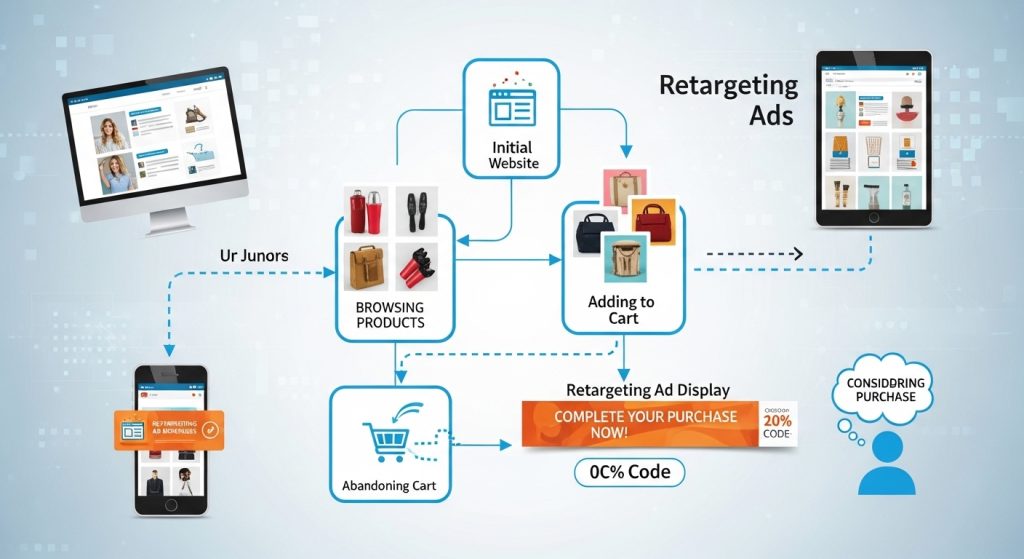
6. Leverage Retargeting Campaigns

Most users don’t convert on their first visit.
Retargeting allows you to:
- Re-engage visitors
- Show personalized ads
- Increase conversions
This strategy significantly improves ROI because you’re targeting users who already showed interest .
7. Track the Right Metrics
Not all metrics matter. Focus on metrics that directly impact ROI:
Important KPIs:
- Conversion Rate
- Cost Per Acquisition (CPA)
- Return on Ad Spend (ROAS)
- Customer Lifetime Value (CLV)
- Click-Through Rate (CTR)
Avoid vanity metrics like likes and impressions unless they lead to conversions.
8. Implement Multi-Touch Attribution

Many businesses rely on last-click attribution, which is misleading.
A customer journey may look like:
- Facebook Ad → Website → Email → Google Search → Purchase
Multi-touch attribution gives credit to all touchpoints, providing a clearer picture of what drives conversions .
This helps:
- Allocate budget correctly
- Identify top-performing channels
- Improve overall ROI
9. Create High-Quality Content
Content marketing plays a major role in improving ROI.
Types of Content:
- Blog posts
- Videos
- Infographics
- Social media content
High-quality content:
- Builds trust
- Drives organic traffic
- Reduces ad dependency
Content marketing combined with ads can significantly improve ROI over time .
10. Invest in SEO for Long-Term ROI
While paid ads deliver immediate results, SEO provides long-term value.
Benefits of SEO:
- Free organic traffic
- Higher credibility
- Sustainable growth
SEO can deliver one of the highest returns compared to other channels, making it a powerful ROI driver .
11. Improve Customer Lifetime Value (CLV)

ROI doesn’t end with one purchase.
Increase CLV by:
- Email marketing
- Loyalty programs
- Upselling and cross-selling
- Excellent customer service
Focusing on long-term customer relationships improves profitability and ROI .
12. Use Data-Driven Decision Making
Data is the backbone of ROI improvement.
Best Practices:
- Use analytics tools (Google Analytics, Meta Ads Manager)
- Track user behavior
- Identify high-performing campaigns
Businesses that rely on data make smarter decisions and achieve better ROI.
13. Automate and Optimize Campaigns
Automation tools can improve efficiency and performance.
Examples:
- Automated bidding
- AI-based targeting
- Budget optimization
Automation helps reduce manual effort and improves campaign performance over time.
14. Allocate Budget Wisely
Not all campaigns perform equally.
Strategy:
- Increase budget for high-performing ads
- Cut spending on low-performing campaigns
- Test new channels gradually
Proper budget allocation ensures maximum returns.
15. Continuously Monitor and Improve
Digital advertising is not a “set it and forget it” strategy.
Regular Actions:
- Analyze performance weekly
- Optimize campaigns
- Test new strategies
Continuous improvement is key to maintaining and increasing ROI.
Conclusion
Improving ROI in digital advertising requires a combination of strategy, data, and continuous optimization. From targeting the right audience to optimizing landing pages and leveraging retargeting, every step plays a crucial role in maximizing returns.
The key takeaway is simple:
Track everything, test continuously, and focus on what drives revenue—not just traffic.
By implementing the strategies discussed in this guide, you can reduce wasted ad spend, increase conversions, and build highly profitable digital advertising campaigns.
About Us
If you want to grow your business with high-ROI digital marketing strategies, we’re here to help.
Website: https://hurairamarketing.site/
Call / WhatsApp: +92 321 6200476
Email: info@hurairamarketing.site