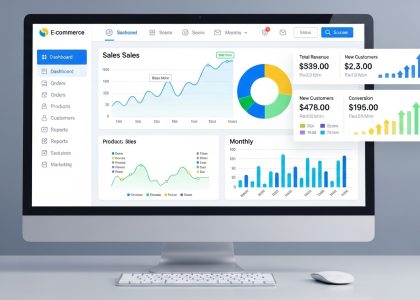
Facebook advertising is one of the most powerful tools for growing an online store. With billions of active users across Facebook and Instagram, businesses can reach highly targeted audiences and convert them into loyal customers. For e-commerce brands, Facebook Ads can drive traffic, increase conversions, and scale revenue quickly when used with the right strategy.
In this article, you will learn the best Facebook Ads strategy for online stores, including campaign structure, targeting methods, ad creatives, retargeting techniques, and scaling strategies. Whether you are running a small Shopify store or a large e-commerce brand, these strategies will help you generate consistent sales.
1. Understanding Facebook Ads for E-commerce

Facebook Ads allow online stores to show paid advertisements to specific audiences based on interests, behaviors, demographics, and previous interactions with your business. These ads appear in Facebook feeds, Instagram feeds, Stories, Reels, Messenger, and other placements.
Facebook is particularly powerful for e-commerce because it allows businesses to target potential customers even if they are not actively searching for products. Advanced targeting and retargeting features make it easier to convert interested users into buyers.
For online stores, Facebook Ads can help:
- Generate targeted website traffic
- Increase product awareness
- Recover abandoned carts
- Retarget interested visitors
- Scale profitable campaigns
2. The Facebook Ads Funnel for Online Stores

The most effective Facebook Ads strategy uses a three-stage marketing funnel:
- Top of Funnel (TOFU) – Awareness
- Middle of Funnel (MOFU) – Consideration
- Bottom of Funnel (BOFU) – Conversion
Each stage targets users at different levels of interest.
Top of Funnel (TOFU)
This stage focuses on reaching new potential customers who have never interacted with your brand.
Best campaign objectives:
- Video Views
- Engagement
- Traffic
At this stage, the goal is not immediate sales but introducing your brand and products to a broader audience.
Effective TOFU ad formats:
- Short product videos
- Lifestyle images
- Problem-solution ads
- Educational content
Video ads work particularly well because they quickly capture attention and generate engagement.
Middle of Funnel (MOFU)
This stage targets users who have already interacted with your brand but have not purchased yet.
Typical MOFU audiences include:
- Website visitors
- Video viewers
- Facebook page engagers
- Instagram profile visitors
These audiences are considered warm audiences and usually convert better because they already know your brand.
Best MOFU ad strategies:
- Product demonstrations
- Customer testimonials
- Reviews and social proof
- Limited-time offers
Bottom of Funnel (BOFU)
This stage targets people who are very close to purchasing.
Typical BOFU audiences:
- Add-to-cart users
- Checkout initiated users
- Product viewers
- Previous buyers
Best BOFU ad formats:
- Discount offers
- Dynamic product ads
- Limited-time promotions
Dynamic product ads automatically show users the exact products they previously viewed on your website, making them extremely effective for conversions.
3. Setting Up the Right Campaign Structure

A well-organized campaign structure is essential for successful Facebook advertising.
Recommended structure for online stores:
Campaign 1: Prospecting (Cold Audience)
Target people who have never interacted with your brand.
Ad sets may include:
- Broad targeting
- Interest targeting
- Lookalike audiences
Campaign 2: Retargeting (Warm Audience)
Target people who engaged with your content or visited your website.
Ad sets include:
- Website visitors
- Video viewers
- Instagram engagers
Campaign 3: Conversion (Hot Audience)
Target people who are closest to buying.
Ad sets include:
- Add-to-cart users
- Checkout initiators
- Product viewers
Using this funnel approach allows businesses to nurture potential customers step by step until they convert.
4. Choosing the Best Facebook Ad Formats

Different ad formats work better depending on your goal.
Image Ads
Simple but effective for showcasing products. Use high-quality images with clear messaging.
Video Ads
Video ads capture attention quickly and are excellent for product demonstrations.
Carousel Ads
Carousel ads allow you to show multiple products or features in a single ad.
These ads often deliver high ROI because users can swipe through multiple items and click on the product they like most.
Collection Ads
Perfect for e-commerce stores. They display multiple products in a mobile-friendly layout.
5. Targeting the Right Audience

Targeting is one of the most powerful features of Facebook Ads.
Interest Targeting
Target people based on interests related to your niche.
Examples:
- Fitness products → Gym, workout, bodybuilding
- Beauty products → Skincare, cosmetics
- Tech products → Gadgets, technology
Interest targeting is especially useful for new stores that do not yet have customer data.
Lookalike Audiences
Lookalike audiences allow Facebook to find new users similar to your existing customers.
You can create lookalike audiences from:
- Website purchasers
- Email lists
- Facebook page engagers
- Lead form submissions
Testing different lookalike sizes such as 1%, 3%, and 5% audiences helps identify which performs best.
Custom Audiences
Custom audiences are created from people who have already interacted with your brand.
Examples:
- Website visitors
- Video viewers
- Add-to-cart users
- Past customers
These audiences usually have the highest conversion rates because they already trust your brand.
6. Creating High-Converting Ad Creatives

Even the best targeting will fail if your ad creative is weak.
Successful Facebook ads usually include:
Strong Hook
Capture attention within the first 2 seconds.
Example:
“Struggling with back pain after long working hours?”
Clear Value Proposition
Explain why your product is better than competitors.
Example:
“Our ergonomic chair reduces back pain and improves posture.”
Social Proof
Add credibility using:
- Customer reviews
- Testimonials
- User-generated content
Clear Call-to-Action
Always guide users toward the next step.
Examples:
- Shop Now
- Get 20% Discount
- Order Today
7. Retargeting Strategy for Higher Conversions

Retargeting is one of the most profitable strategies in Facebook advertising.
Most users do not purchase on their first visit, so retargeting helps bring them back.
Best retargeting audiences:
- Website visitors (7 days)
- Product viewers (14 days)
- Add-to-cart users (7 days)
Shorter retargeting windows such as 1-day, 3-day, and 7-day audiences often perform better because they capture users with the highest purchase intent.
8. A/B Testing for Better Performance
Testing is essential for improving Facebook Ads performance.
Test different elements such as:
- Ad creatives
- Headlines
- Target audiences
- Call-to-actions
- Landing pages
Advertisers who consistently test multiple ad variations often achieve higher click-through rates and lower advertising costs.
9. Optimizing Landing Pages

Even the best ads will fail if the landing page is poor.
Your product page should include:
- Fast loading speed
- High-quality product images
- Clear product benefits
- Customer reviews
- Simple checkout process
Slow websites can negatively affect Facebook ad performance and reduce conversions.
10. Scaling Winning Campaigns

Once you find a profitable campaign, you can start scaling it.
Safe scaling methods include:
Budget Scaling
Increase budget gradually by 20–30% every few days to avoid disrupting performance.
Duplicate Ad Sets
Duplicate winning ad sets instead of increasing budget drastically.
Expand Audiences
Test larger lookalike audiences or broader targeting to reach more potential customers.
11. Key Metrics to Track
To run profitable Facebook ads, monitor these metrics:
- CTR (Click-Through Rate) – Measures ad engagement
- CPC (Cost per Click) – Cost of each click
- CPA (Cost per Acquisition) – Cost per sale
- ROAS (Return on Ad Spend) – Revenue generated per dollar spent
Tracking these metrics helps you optimize campaigns and eliminate unprofitable ads.
12. Common Facebook Ads Mistakes
Many online stores fail because of common mistakes such as:
- Poor ad creatives
- Targeting the wrong audience
- No retargeting strategy
- Sending traffic to slow websites
- Not testing different ads
Avoiding these mistakes can significantly improve your campaign performance.
Conclusion
Facebook Ads remain one of the most powerful marketing channels for online stores. When used correctly, they can generate consistent traffic, increase sales, and scale your business.
The key to success is using a structured funnel strategy, targeting the right audience, creating high-quality creatives, and constantly testing and optimizing campaigns.
By implementing the strategies discussed in this guide—such as lookalike audiences, retargeting campaigns, dynamic product ads, and A/B testing—you can maximize your return on ad spend and build a profitable e-commerce business.
If you want professional help running Facebook Ads for your online store, you can contact the team at Huraira Marketing.
Website: https://hurairamarketing.site/
Call / WhatsApp: +92 321 6200476
Email: info@hurairamarketing.site